
In the world of digital marketing, SEO and SEM are often used interchangeably; but, they’re no longer the equal issue. Both desire to improve your website’s visibility in search engines, yet they work in very different ways. Learning whilst and the way to use each can make a massive distinction in how successfully you attract and convert traffic.
Let’s break down the differences, costs, timelines, and when to use each.
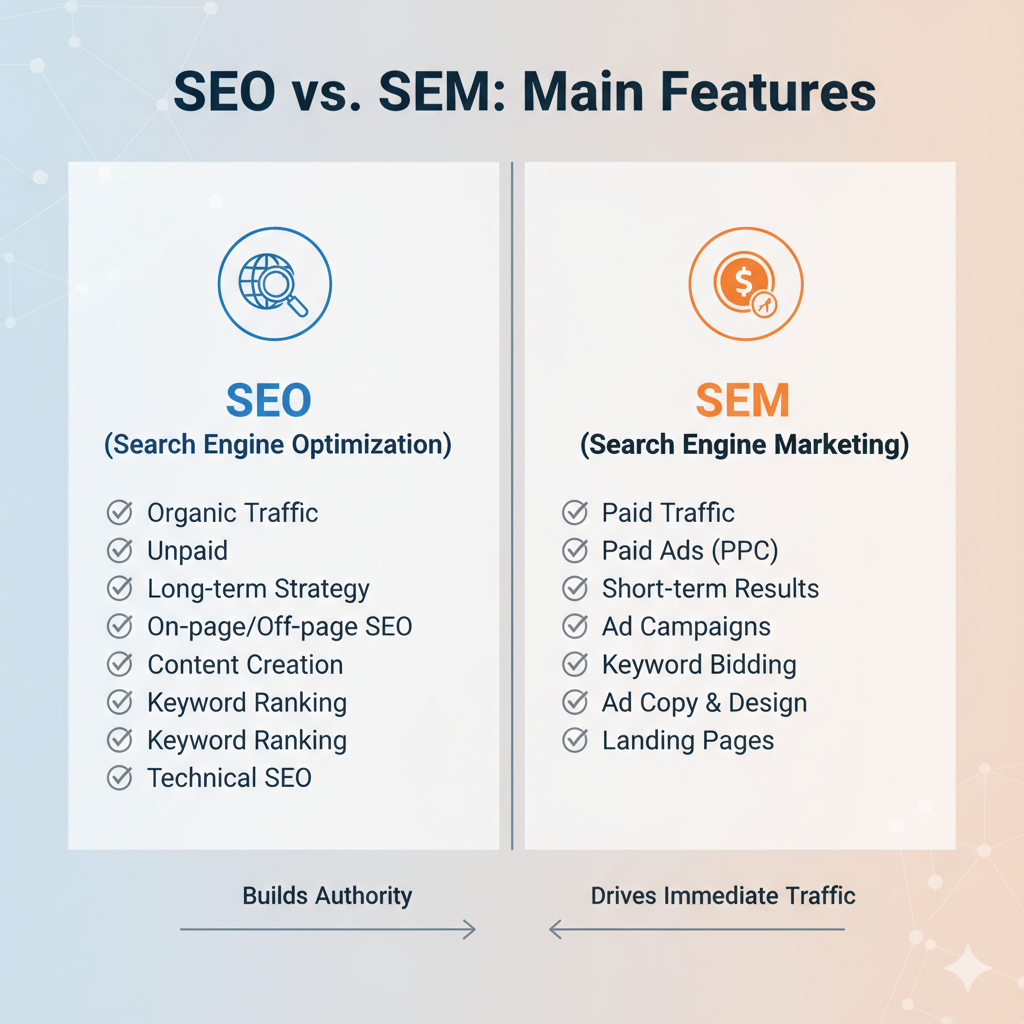
SEO vs. SEM: Main Features
Search Engine Optimization (SEO) is the process of enhancing your website’s organic visibility on search engines like Google. It entails optimizing your content material, website structure, and backlinks to rank better without paying for clicks.
Search Engine Marketing (SEM), however, is a broader approach that consists of paid seek advertising and marketing (like Google Ads). SEM covers each search engine marketing (organic search) and PPC (paid search) efforts — however in maximum contexts, human beings use SEM to mean paid seek marketing.
SEM Overview
SEM makes a speciality of paid advertising and marketing to get immediate visibility on seek results pages. Through Google Ads, Bing Ads, or different platforms, you bid on key phrases so your ad appears whilst users look for the ones phrases.
SEM campaigns allow you to:
- Target particular demographics, locations, and gadgets
- Control ad spend and timing
- Get measurable consequences (clicks, impressions, conversions)
- Test messaging speedy
The biggest advantage of SEM is speed. If you want immediate traffic, especially for new products or time-sensitive promotions, SEM delivers.
SEO vs. SEM: How Long It Takes to See Results
SEO:
Typically, it takes 3–6 months to look at significant results from search engine marketing. Search engines need time to crawl, index, and rank your updated content. The payoff, although, is that when your pages begin rating, the visitors keep coming — even without ongoing ad spend.
SEM:
Paid campaigns can generate results right away once approved. You can begin seeing clicks and conversions the same day your marketing campaign launches. However, the visibility disappears as soon as your ad budget stops.
SEO vs. SEM: How Much They Cost
SEO Costs:
While there’s no cost per click, It involves investment in:
- Content creation and optimization
- Link building
- Technical audits and tools (like Ahrefs, Semrush, or Yoast)
Over time, SEO may be more fee-effective for the reason that traffic maintains even if spending stops.
SEM Costs:
It is pay-to-play. You pay for every click or impression your ad gets. Costs vary depending on your industry and opposition — from ₹10 to ₹500+ in step with click on. The more aggressive the keyword, the higher the bid.
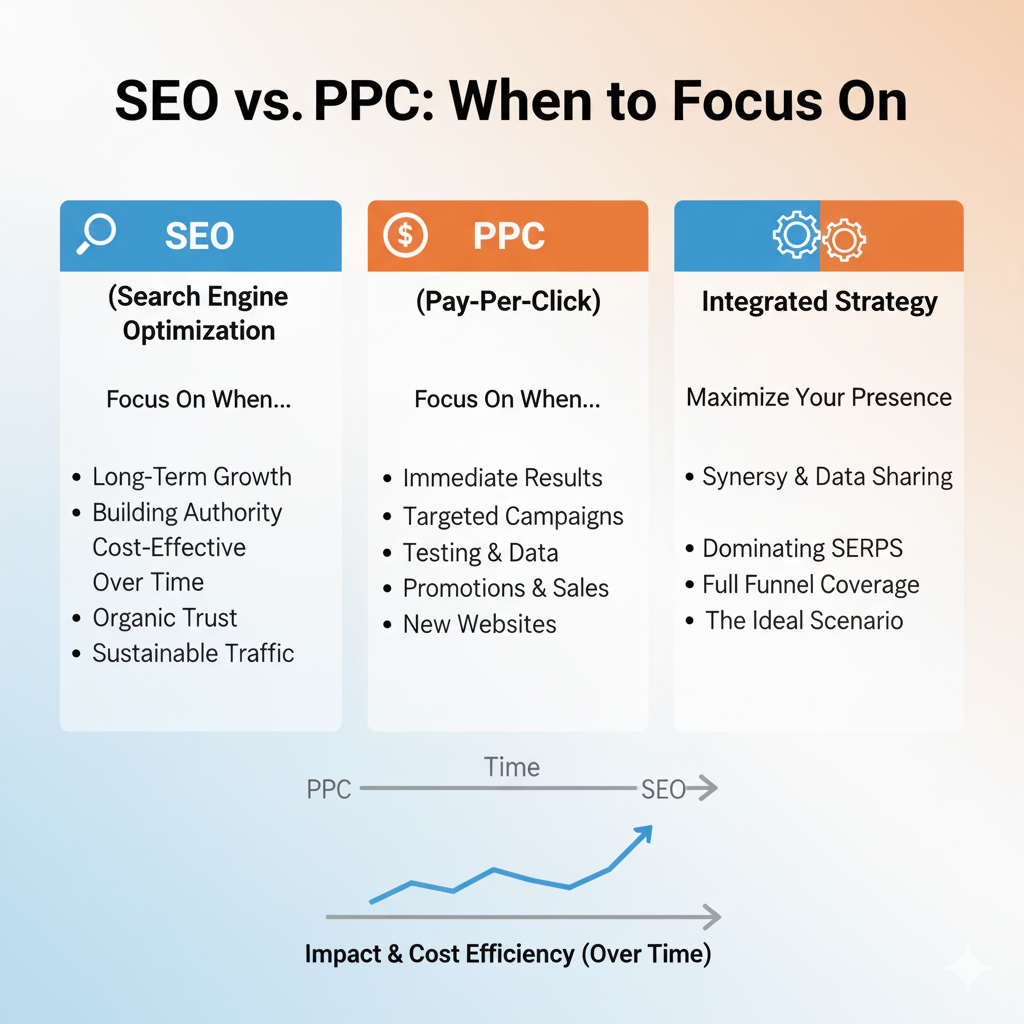
SEO or PPC: What to Focus On
If you’re choosing between search engine marketing and PPC, the proper solution depends on your goals, timeline, and budget.
- Want a lengthy-time period boom and brand authority? → Focus on SEO
- Need fast leads and instant visibility? → Go for PPC.
For most corporations, a mix works fine — using PPC to drive short results even as search engine optimization builds sustainable increase.
When to Focus on PPC
PPC makes sense when:
- You’re launching a new website or product with no existing traffic
- You need instant visibility in a competitive market
- You’re running limited-time promotions or sales
- You want to test keywords and landing pages before investing in SEO
It gives you agility and control, which is invaluable in fast-moving markets.
When To Do Both (SEM)
Combining search engine optimization and PPC beneath a unmarried SEM approach offers you the satisfactory of each worlds:
- PPC brings instant visitors and checking out opportunities
- search engine optimization ensures your natural visibility grows progressively
- You can retarget visitors who came from organic searches with paid ads
- Data from PPC helps identify high-converting keywords for SEO
This hybrid method maximizes your visibility and ROI — particularly while you want to dominate both the paid and organic sections of Google’s results.
Final Thoughts
Search engine optimization builds the foundation. Pay-per-click provides the acceleration.
When used together under an SEM strategy, they can fuel both short-term wins and long-term growth.
The smartest marketers don’t pick between SEO or SEM — they use each strategically to stay ahead of the competition.