
Content gap analysis is a structured way to find what your audience wants that your content does not yet provide (or does not provide well enough), then turn those gaps into traffic, leads, and revenue.
What is content gap analysis?
Content gap analysis is the process of identifying topics, keywords, questions, and formats that your existing content is missing compared to what your audience searches for and what competitors already rank for. It compares your current content performance with an ideal “target” state, then outlines what needs to be optimized or created to close that gap.
Typical “gaps” include:
- Missing topics or keywords your competitors rank for but you do not.
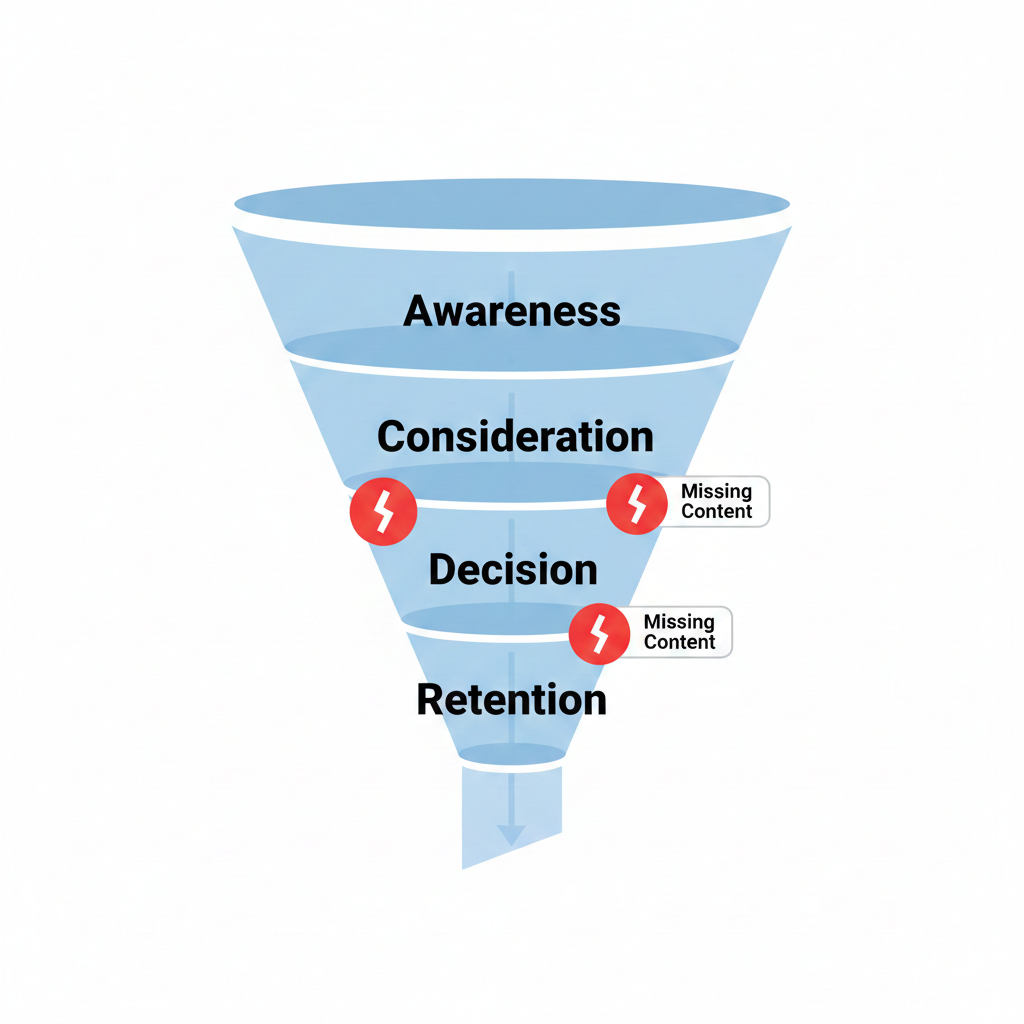
- Stages of the buyer journey (awareness, consideration, decision, retention) where you have little or no content.
- Shallow, outdated, or poorly structured pages that do not fully answer user intent.
Why is content gap analysis important?
Content gap analysis prevents random content creation and makes your strategy data‑driven. Instead of guessing topics, you map what people actually search for and what drives competitors’ traffic, then prioritize what will move the needle fastest.
Key benefits:
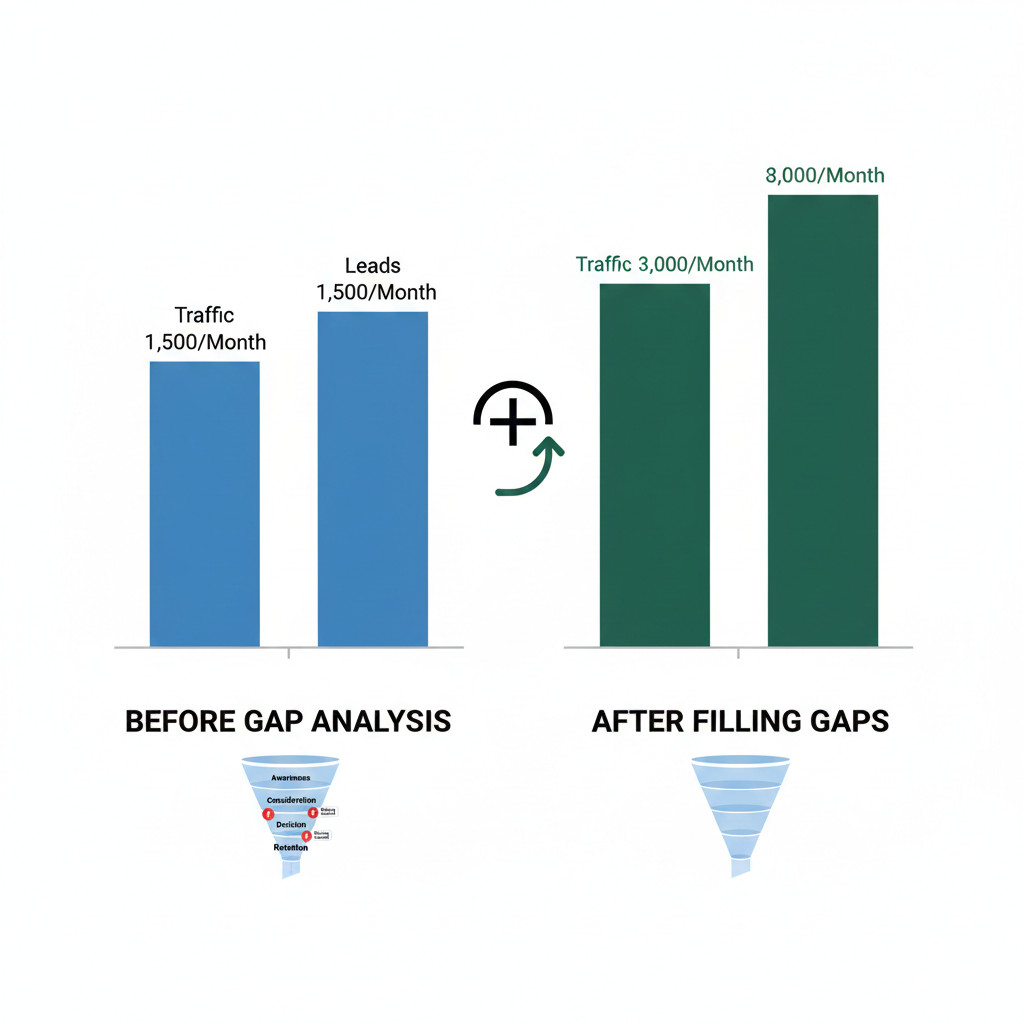
- Higher organic traffic: Covering missing topics and keywords expands your search visibility and total addressable traffic.
- Better conversion paths: Filling gaps across the buyer journey creates smooth paths from problem to purchase (blog → comparison → case study → demo).
- Competitive advantage: You can outperform rivals by covering topics they miss or by creating more complete, fresher, and more usable content on the same topics.
Best practices for content gap analysis
A solid content gap analysis combines competitor research, keyword data, SERP analysis, and first‑party audience insights. Following best practices helps you avoid shallow lists of keywords that never turn into results.
Best practices include:
- Start with clear goals (e.g., “increase demo requests for X product” or “own informational keywords in Y niche”).
- Use multiple data sources (e.g., Ahrefs, Semrush, Search Console) instead of relying on a single tool’s keyword estimates.
- Segment by intent and funnel stage to ensure you are not over‑invested in only awareness content.
- Include voice‑of‑customer research (support tickets, sales calls, social media, reviews) so you find questions competitors have not answered well.
Analyze Google’s first page
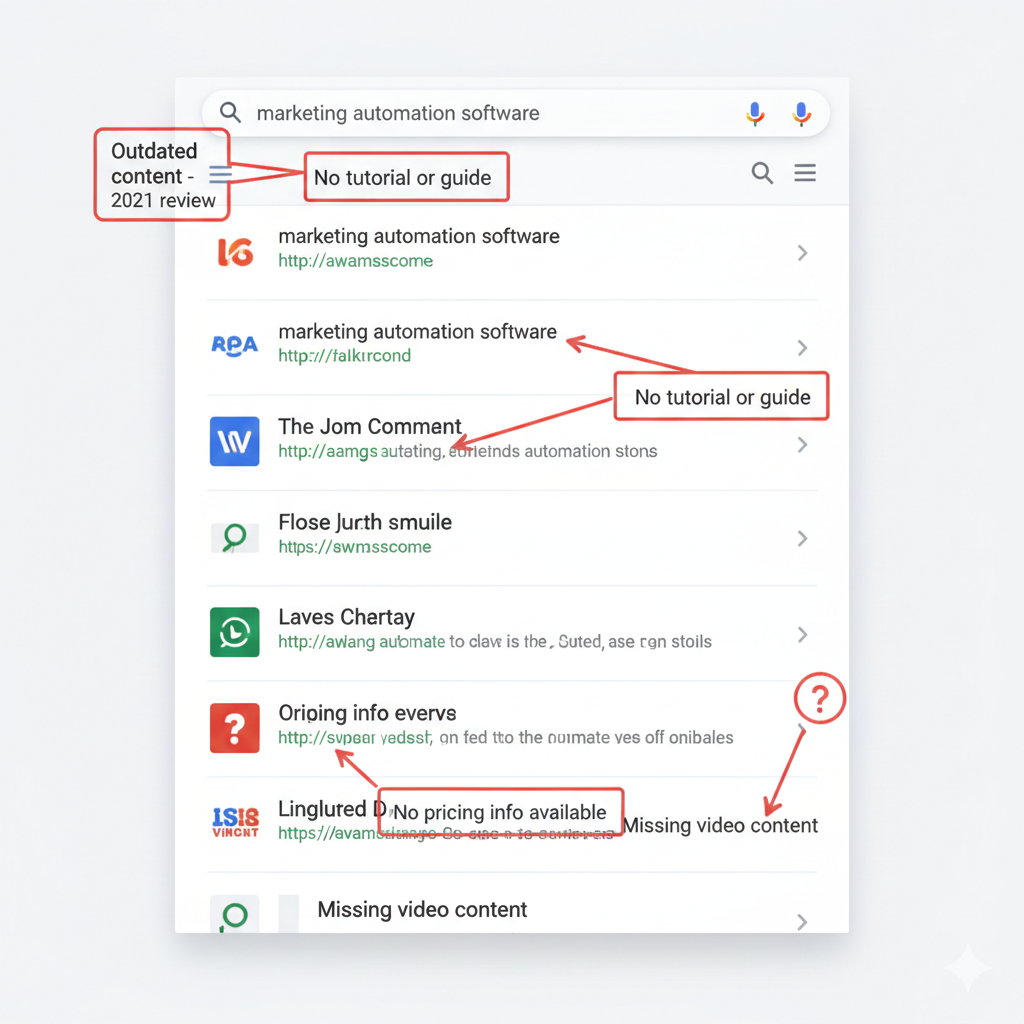
Google’s first page is the best live benchmark of what “good enough to rank” looks like for any topic. By reviewing the top results, you can spot gaps in freshness, depth, format, and UX that you can exploit with better content.
How to review page one:
- Search your target keyword and list the top 10 URLs and their formats (blog, product page, listicle, video, guide).
- For each, evaluate freshness (last updated), depth (subtopics covered), structure (headings, FAQs), media (images, video), and unique value (original data, frameworks).
- Note common patterns (e.g., all list posts with 20+ items) and visible gaps (e.g., no clear step‑by‑step tutorial, no local examples, no downloadable templates).
This process tells you what you must match (table stakes) and where you can differentiate (your “angle”).
Use tools to scale this process
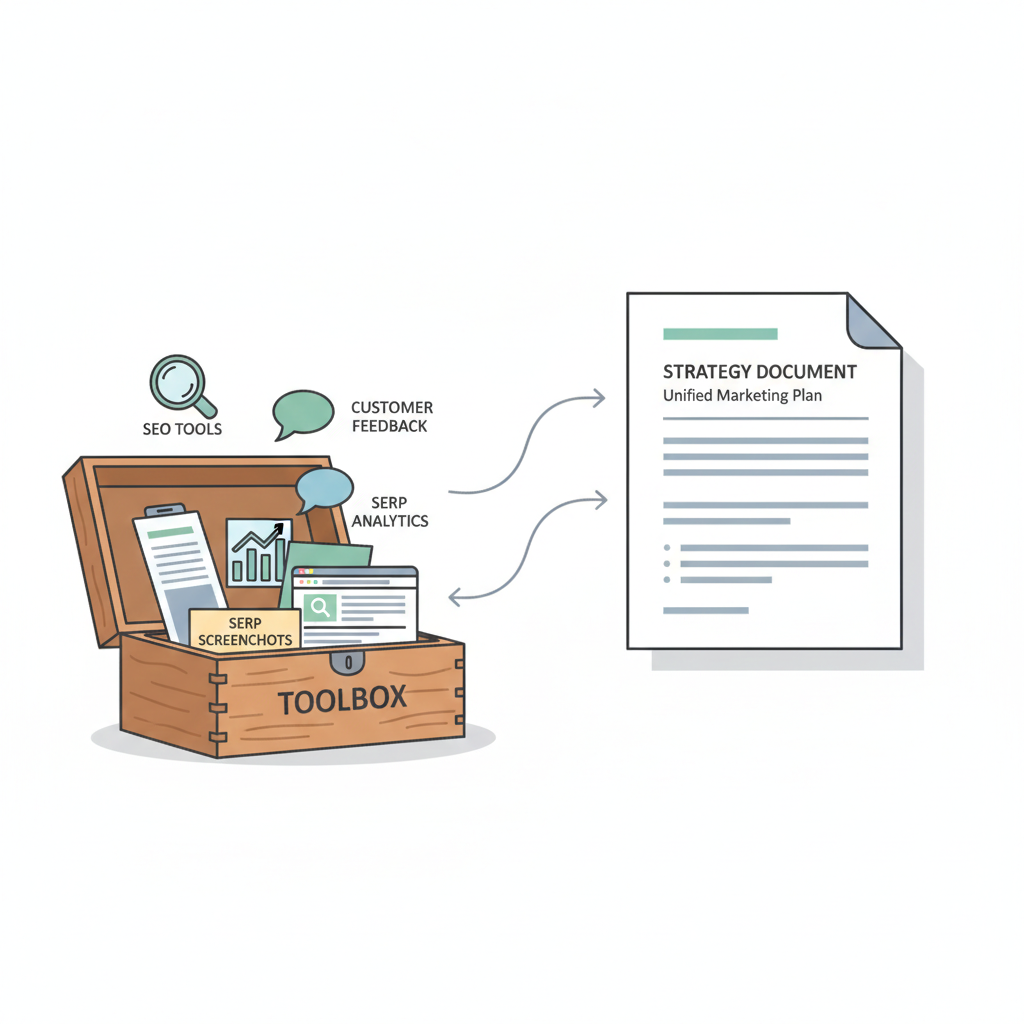
Manual review is powerful but slow; SEO tools let you scale content gap analysis across thousands of keywords and multiple competitors.
Common tool workflows:
- Competitor keyword gaps: Ahrefs’ Content Gap or Semrush’s Keyword Gap compare your site to up to several competitors and list keywords they rank for that you do not.
- Keyword clustering: Group related keywords into topics so you plan pages, not one‑keyword posts (e.g., “CRM software,” “best CRM for small business,” “CRM features” → one pillar page).
- Traffic potential and difficulty: Use metrics like “Traffic Potential,” keyword difficulty, and SERP features to prioritize opportunities that can realistically drive traffic and leads.
Also combine tool data with Google Search Console to see queries where you already get impressions but underperform (low CTR or low average position). These are quick‑win gaps you can close by improving existing content.
Audit your own content
A content gap analysis is incomplete if you only study competitors; you must also audit your own content to understand how it performs, overlaps, and fails users.
Steps to audit your content:
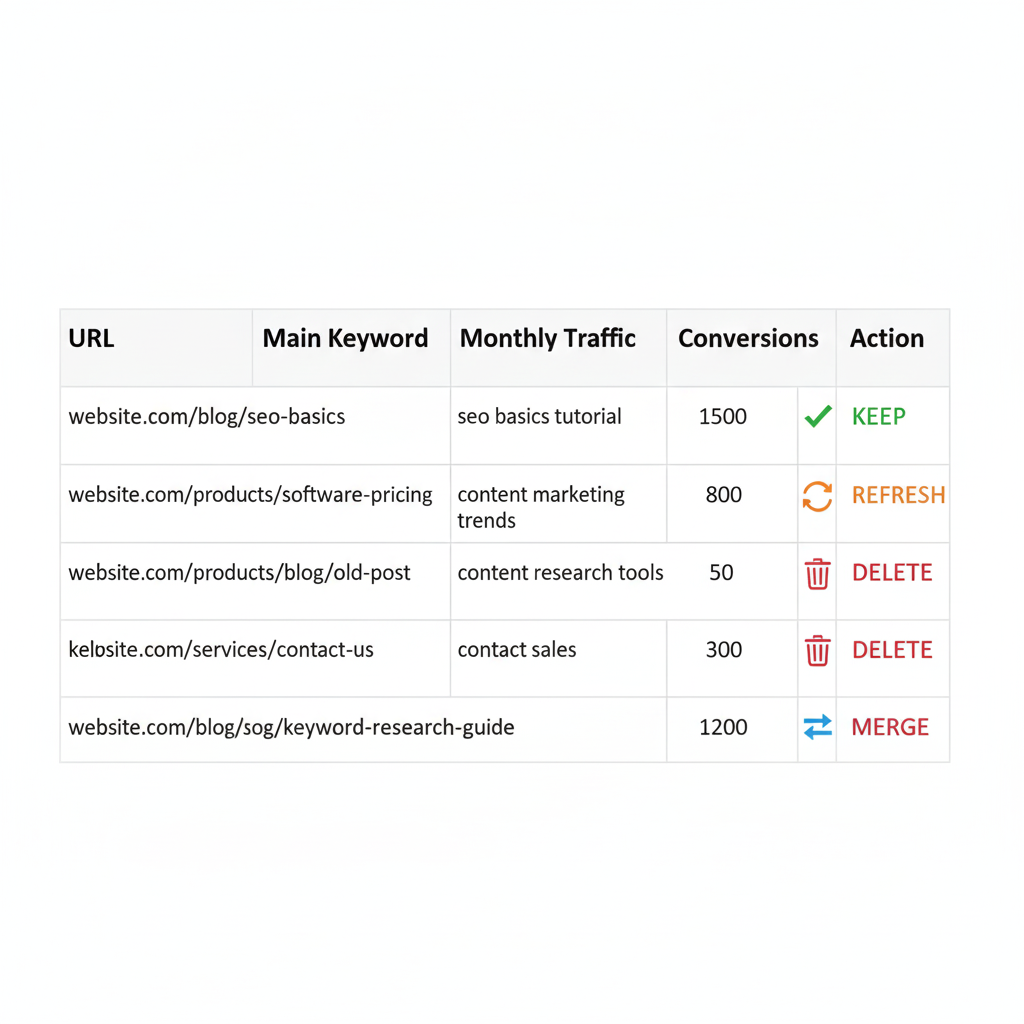
- Inventory all key URLs (blog posts, landing pages, product pages, resources) with URL, topic, target keyword, funnel stage, traffic, conversions, and update date.
- Map URLs to keyword/topic clusters and detect duplicates and thin content (several weak articles on similar topics instead of one strong guide).
- Evaluate each piece: keep as‑is, refresh/expand, merge with other content, or prune if it is outdated, low‑quality, or irrelevant.
While auditing, compare what your content covers vs your keyword/topic map; any audience questions that do not map to a strong piece of content become priority gaps.
Learn more and turn gaps into growth
Content gap analysis is not a once‑a‑year audit but an ongoing strategic habit that continually feeds your editorial calendar. By regularly revisiting competitors, SERPs, keyword data, and customer feedback, you keep spotting new gaps as search behavior and markets evolve.
To go deeper:
- Explore detailed how‑to guides from specialist SEO blogs that walk through advanced gap workflows, including clustering and mapping.
- Learn the specifics of tools like Ahrefs’ Content Gap and Semrush’s Keyword Gap to automate larger parts of the process.
- Build a repeatable quarterly process: update keyword sets, re‑check top competitors, re‑audit key pages, and adjust your content roadmap accordingly.