Building an effective SEO team is about combining the right people, skills, and processes so your brand can win long‑term organic traffic and revenue.
What Does an SEO “Dream Team” Look Like?
An SEO team is a cross‑functional group that blends strategy, technical expertise, content, and promotion into one coordinated machine. In most growing businesses, the ideal core team includes:
- Head of SEO or SEO Manager (strategy and leadership).
- Technical SEO specialist (site health, performance, and crawlability).
- Content SEO specialist or SEO content lead (keyword‑driven content and on‑page optimization).
- Outreach / Link building specialist (authority and relationships).
- SEO analyst (data, reporting, experimentation).
- Shared support from web development, design, and broader marketing.
In smaller companies, one person may wear multiple hats, but the dream setup ensures every key responsibility—technical, content, authority, UX, and promotion—is clearly owned.
Key Skills Every SEO Team Needs
Your SEO team must master both hard and soft skills to move the needle consistently.
Core hard skills
- Keyword research and search intent analysis (tools like Search Console, keyword tools, SERP analysis).
- On‑page optimization (titles, meta tags, internal linking, schema, content structure).
- Technical SEO (site architecture, crawl budget, indexation, Core Web Vitals, structured data).
- Analytics and reporting (Google Analytics, Search Console, BI tools, dashboards, forecasting).
- Outreach and digital PR (prospecting, email outreach, relationship building).
Core soft skills
- Strategic thinking (aligning SEO with business goals and revenue).
- Communication and stakeholder management (explaining SEO to leaders, product, and non‑technical teams).
- Project and prioritization skills (roadmaps, impact vs. effort, managing backlogs with dev/content).
- Adaptability and curiosity (SEO changes fast; the team must test, learn, and update playbooks often).
An example: a high‑performing SEO content lead will not just add keywords; they’ll read SERPs, understand competitor intent, talk to sales, and define content that both ranks and converts.
Web Development: The Technical Backbone
Even if developers aren’t “in” the SEO team on paper, they are indispensable partners. Most real SEO wins depend on what gets shipped to production.
How web development supports SEO
- Implementing technical fixes: redirects, canonical tags, robots.txt, XML sitemaps, hreflang, pagination.
- Improving performance: page speed, Core Web Vitals, image optimization, JavaScript rendering.
- Structuring the site: clean URL structures, logical navigation, internal linking, scalable templates for category and product pages.
- Implementing schema and tracking: structured data markup and analytics tags.
To make this collaboration work, your SEO team should maintain a prioritized technical SEO backlog, write clear tickets, and join sprint planning so SEO tasks don’t get stuck for months.
Content Creation: Turning Strategy into Assets
Without content, SEO is just a spreadsheet of keywords. Your content function transforms research into articles, landing pages, product pages, and resources that earn rankings and trust.
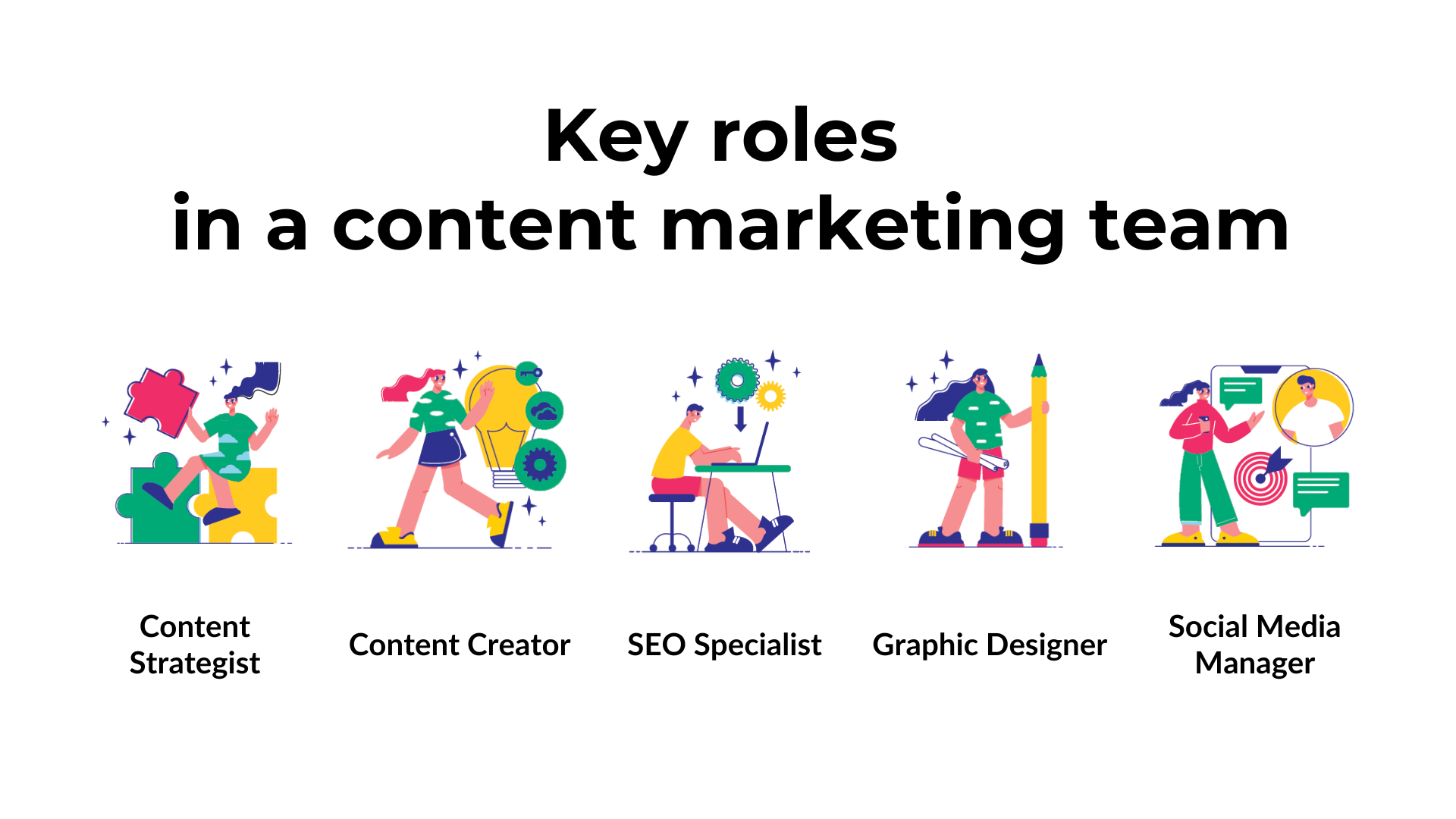
Roles often involved
- Content SEO specialist or strategist (defines topics, briefs, and optimization rules).
- Copywriters and editors (produce engaging, brand‑aligned copy that satisfies user intent).
- Subject matter experts (provide depth, accuracy, and originality).
What great SEO content teams do
- Build content calendars around themes and clusters instead of random topics.
- Use clear briefs with target keywords, search intent, outline, internal links, and SERP insights.
- Continuously optimize existing pages—refreshing outdated info, improving E‑E‑A‑T signals, and expanding sections based on performance data.
- Think beyond text: FAQs, supporting visuals, and formats that answer questions quickly.
For example, a university might build a “Study in India” pillar page plus supporting guides and student stories, all mapped to specific search intents and funnel stages.
Link Building: Authority and Relationships
Links remain a major ranking signal, especially in competitive niches. A dedicated link building or outreach specialist focuses on earning relevant, high‑quality mentions rather than chasing spammy quick wins.
Key responsibilities
- Prospecting: identifying relevant sites, publications, communities, and creators.
- Outreach: personalized emails, social engagement, and long‑term relationship building.
- Campaigns: digital PR, data studies, tools, or stories worth linking to.
- Monitoring: tracking new links, disavowing harmful links when necessary, and reporting on authority growth.
Strong link builders work closely with content and PR to create assets that journalists, bloggers, and industry peers actually want to reference (e.g., original data or authoritative guides).
Design: UX, Branding, and Engagement
Design is often overlooked in SEO discussions, but it hugely affects engagement signals, conversions, and even how search engines interpret your site.
How design elevates SEO
- Clear, scannable layouts with headings, spacing, and visual hierarchy that match search intent.
- Mobile‑first experiences: responsive design, tap targets, and readable type on small screens.
- Visual storytelling: graphics, diagrams, and images that help users understand complex topics faster.
- Strong brand presence: consistent use of color, typography, imagery, and voice to build trust.
Your SEO teams and design teams should co‑own key templates (like blog posts, category pages, product pages) so they balance crawlability, UX, and conversion goals.
Marketing and Promotion: Amplifying Your SEO Wins
SEO doesn’t live in a vacuum; it works best when integrated with wider marketing. Promotion accelerates content discovery, builds brand signals, and fuels future link opportunities.
Where marketing collaborates with SEO
- Social media: distributing new content, repurposing articles into short posts, driving early engagement.
- Email: featuring new guides and tools in newsletters, nurturing subscribers with educational content.
- Paid campaigns: using PPC data to refine SEO keyword priorities and test landing page messaging.
- Brand and PR: coordinating announcements, campaigns, and thought leadership that can earn coverage and links.
For example, when you publish a major report, coordinated outreach, social promotion, and email campaigns can attract both traffic and authoritative backlinks, reinforcing SEO success.
Learn More: How to Actually Build Your Team
If you’re building an SEO team from scratch, start lean, then layer on specialization as you grow.
Stage 1: Foundation (small business / startup)
- One versatile SEO generalist or SEO + content hybrid who understands strategy, on‑page SEO, and basic technical issues.
- Part‑time support from a developer and designer for technical fixes and templates.
Stage 2: Growth (scaling traffic and revenue)
- Add a dedicated technical SEO specialist to handle complex architecture, performance, and schema.
- Hire or assign a content SEO strategist plus writers to scale production and optimization.
- Start formalizing link building through an outreach specialist or PR partner.
Stage 3: Enterprise (large, multi‑site, or global)
- Head of SEO / SEO Director to own vision, budgets, and executive communication.
- SEO strategy manager or program manager to run roadmaps and cross‑team coordination.
- Separate teams for technical SEO, content, outreach/PR, analytics, and regional SEO leads.
Wherever you are on this journey, the core principle is the same: define clear ownership for technical health, content quality, authority, and promotion, then empower your SEO team with the tools and cross‑functional support they need to win long‑term.