LSI (Latent Semantic Indexing) keywords are terms and phrases that are conceptually linked to your primary target keyword. These semantically related words help search engines understand the context and topic of your content, instead of depending just on exact keyword matches.
What are LSI Keywords?
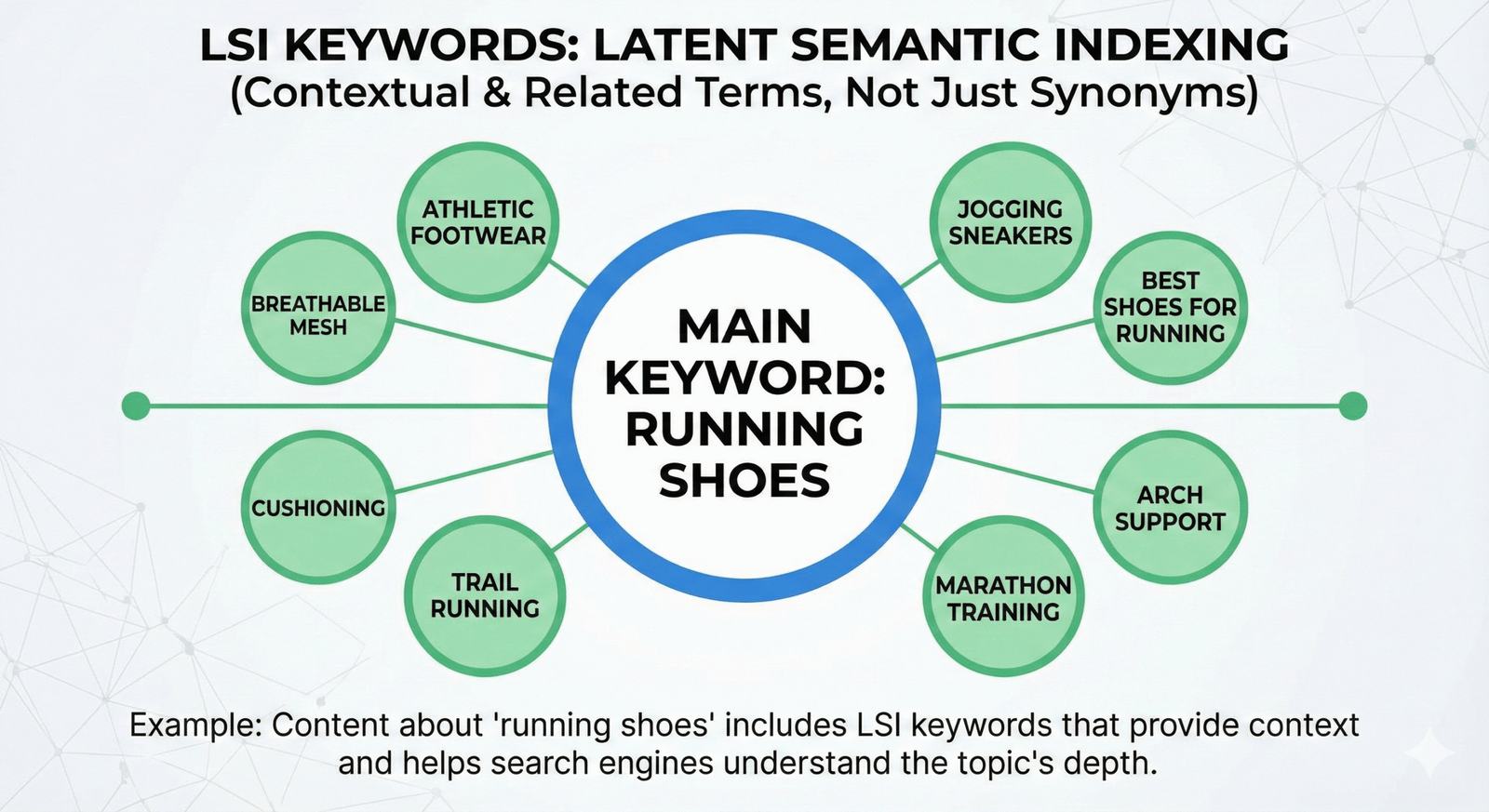
LSI keywords are words and phrases thematically linked to your focus keyword that help search engines understand your content’s context. Unlike synonyms, LSI keywords identify terms naturally expected in content related to your main topic. For example, if your primary keyword is “restaurants,” related LSI keywords would include “cuisine,” “waiters,” “food,” and “menu”. Similarly, content about “running shoes” might feature LSI keywords like “athletic footwear,” “jogging sneakers,” and “best shoes for running”.
The technology originated from a 1988 research paper that introduced LSI as “an approach for dealing with the vocabulary problem in human-computer interaction”. The methodology treats information retrieval as a statistical problem, presuming an underlying latent semantic structure in word usage patterns.
Does Google Use LSI in Its Algorithm?
Google does not use the specific Latent Semantic Indexing algorithm in its search rankings. LSI is an outdated mathematical technique patented by Bell Labs in 1988, and Google has confirmed that it doesn’t employ this particular method. However, Google does utilize modern language models and natural language processing to understand semantic relationships between words.
Google employs more advanced approaches like Word Vector technology developed by the Google Brain team. While the term “LSI keywords” persists in SEO discussions, what practitioners actually mean are semantically related terms that help establish topical relevance.
Why are Related Words and Phrases On a Page Important?
Related words and phrases deliver important context that helps search engines understand your content’s true meaning. This contextual bearing controls the need for repetitive keyword stuffing while allowing search engines to get your topic thoroughly. For instance, instead of constantly using “digital marketing,” you can naturally incorporate related terms like “content marketing,” “social media strategy,” and “online advertising”.
Using semantically related terms improves content readability, improves user experience, and aligns with search engines’ growing standards for delivering valuable information. Pages with well-integrated related keywords tend to rank better for multiple search queries and avoid keyword stuffing penalties.
How to Find LSI Keywords
Google Autocomplete
Google Autocomplete indicates your search queries based on common searches similar to what you’ve typed. Start typing your main keyword into the Google search bar, and you’ll see a list of suggested searches that function as potential LSI keywords. These autocomplete suggestions represent terms users continually search for in relation to your topic.

Related Searches
The “Searches Related to” section at the bottom of Google’s search results page is a goldmine for LSI keywords. After searching your primary keyword, scroll down to find this section, which shows queries semantically connected to your search term. These related searches recall what other users generally look for alongside your main keyword.
Bold Terms in Google Snippet Descriptions
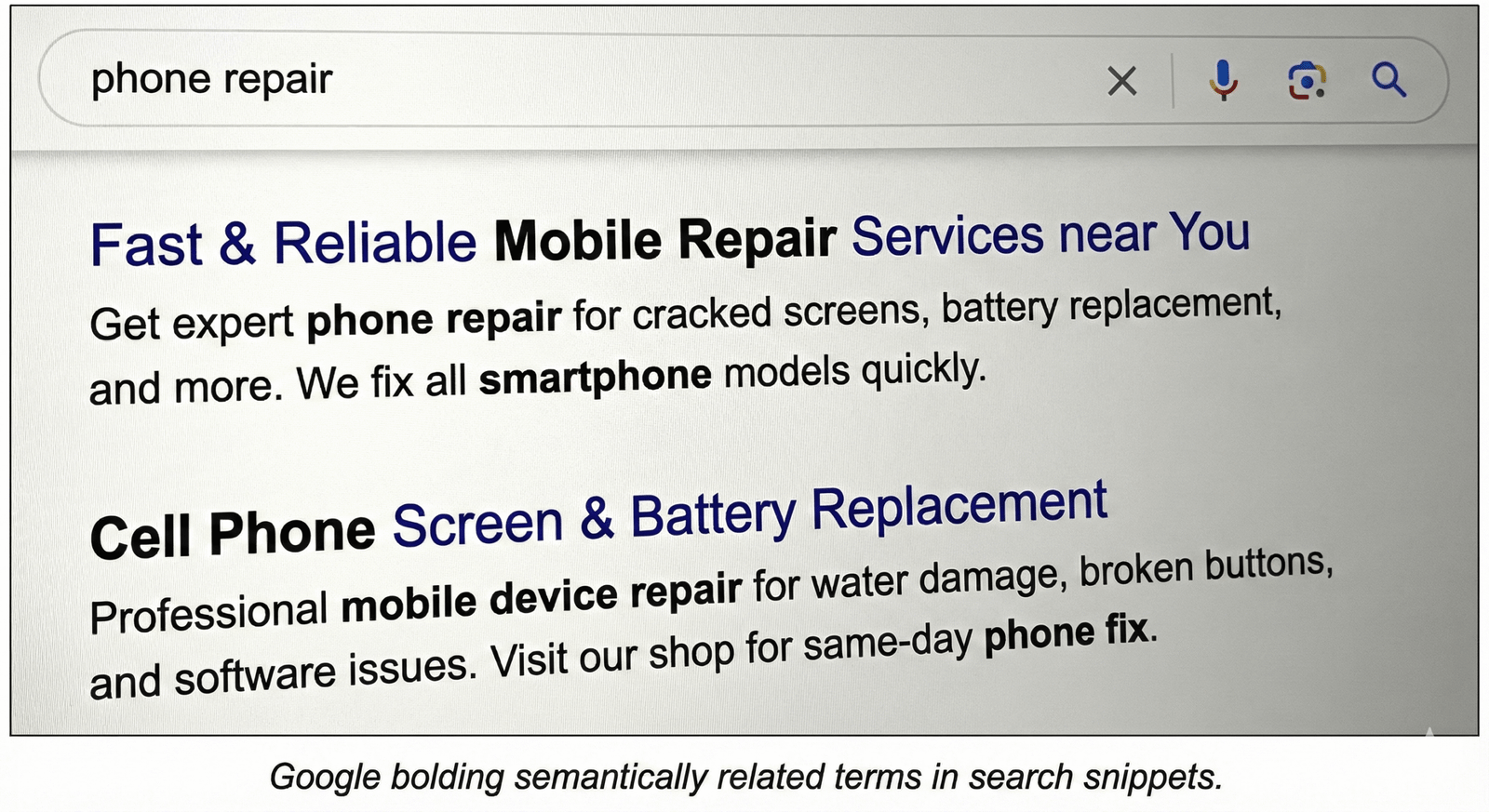
Google highlights semantically related terms in bold within search result snippets. When you search for a keyword, examine the snippet descriptions and note the bolded words that aren’t your exact target keyword. For example, searching “phone repair” will bold both exact matches and related terms like “mobile repair,” indicating these are semantically connected keywords.
Google Keyword Planner
Google Keyword Planner helps identify related keywords and phrases appropriate to your content. This tool provides keyword suggestions that are thematically connected to your primary keyword, along with search volume data.
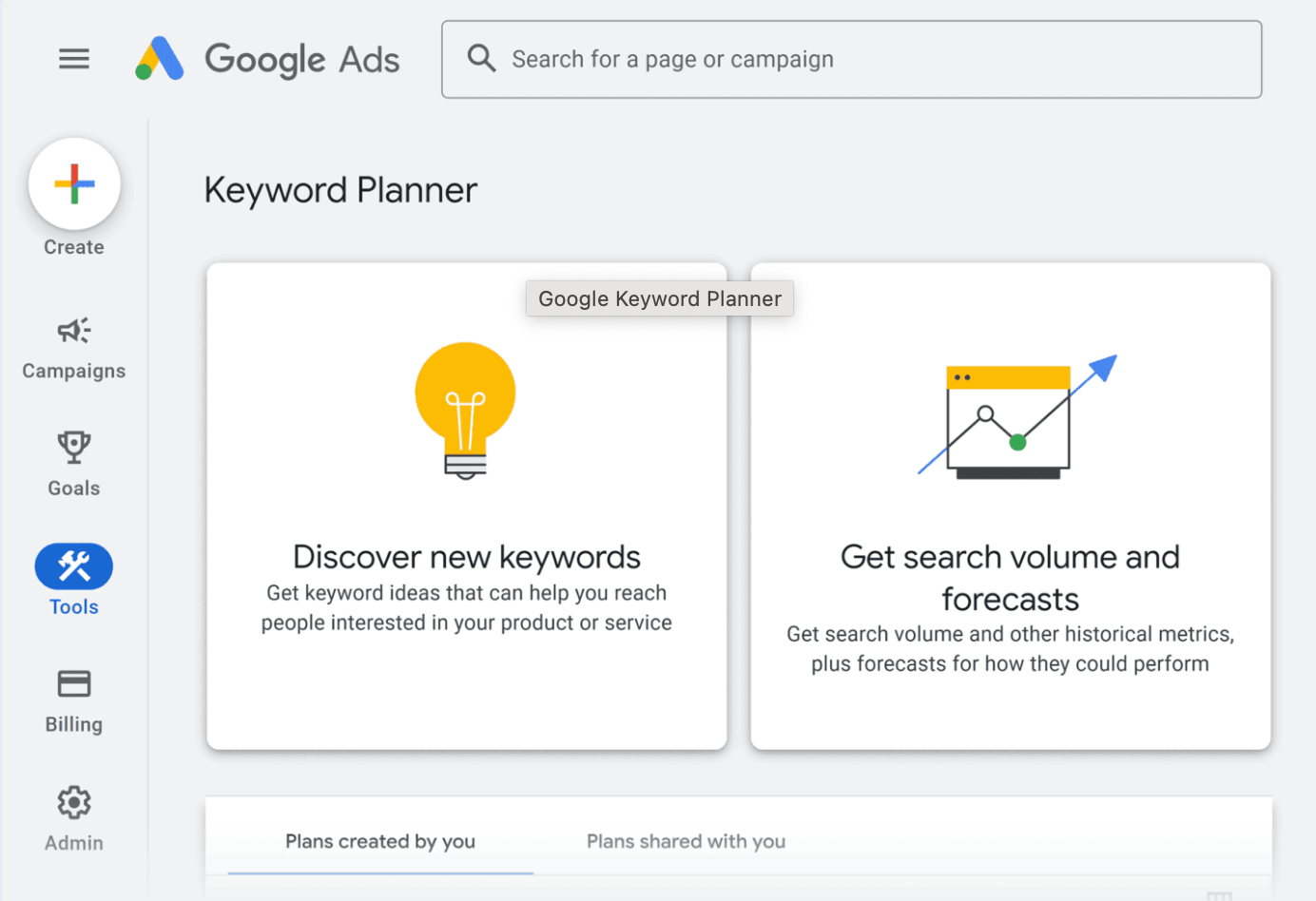
Other options include SEMrush and LSIGraph, which offer additional LSI keyword discovery capabilities.
Google Image Tags
Exploring tags in Google Images reveals related terms associated with your topic. When you search for an image related to your keyword, Google shows related search tags that describe semantically connected ideas. These image tags provide another avenue for discovering LSI keywords that users associate with your subject.
How to Use Latent Semantic Indexing Keywords
Place LSI keywords strategically throughout your content in key areas, including headings, subheadings, introduction, conclusion, body content, alt text, image file names, and link text. The goal is to contain these terms naturally without staining your content’s readability or flow. Rather than repeating the same keywords, use different but related phrases to create comprehensive, context-rich content.
Balance your writing so it remains relevant to both search engines and human readers. Use topic clusters where a pillar page covers a broad topic and supporting pages dive into specific subtopics, creating a semantic network of related content. Analyze top-ranking competitor pages to identify common terms they use and integrate these naturally into your own content.
Learn More about Semantics in SEO
Semantic SEO involves building meaning into your content by optimizing for the true intent behind user search queries rather than just exact match keywords. This approach aligns with search engines’ growing capabilities to understand and interpret query context. Modern search engines analyze entire content pieces rather than just primary keywords, making semantic relevance crucial for SEO success.
Focus on creating content that addresses user intent through contextually related topics and comprehensive coverage. By strategically incorporating semantically related terms, you enhance organic visibility, improve user experience, and align with search engines’ standards for delivering valuable, contextually relevant content.