
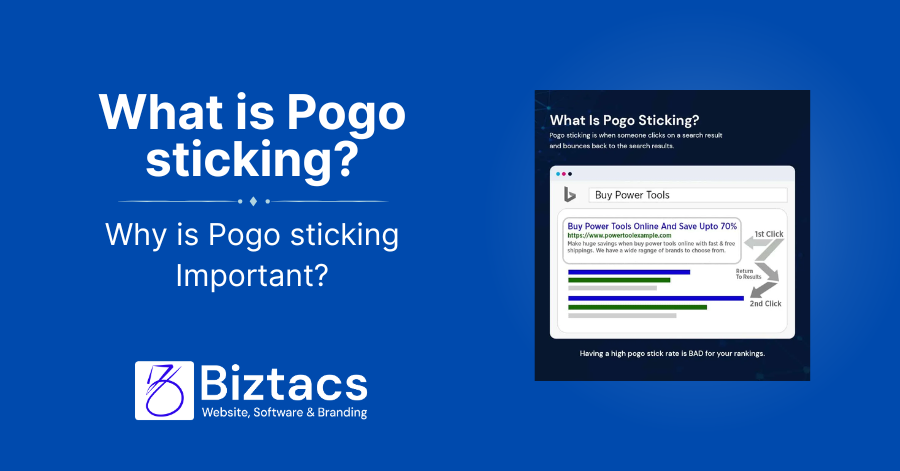
Pogo sticking is a user behavior in search results where someone clicks your page, realizes it is not what they wanted, and quickly jumps back to Google to choose another result. This blog explains what pogo sticking is, why it matters for SEO, and practical steps to reduce it by aligning content with user intent and improving on-page experience.
What is pogo sticking?
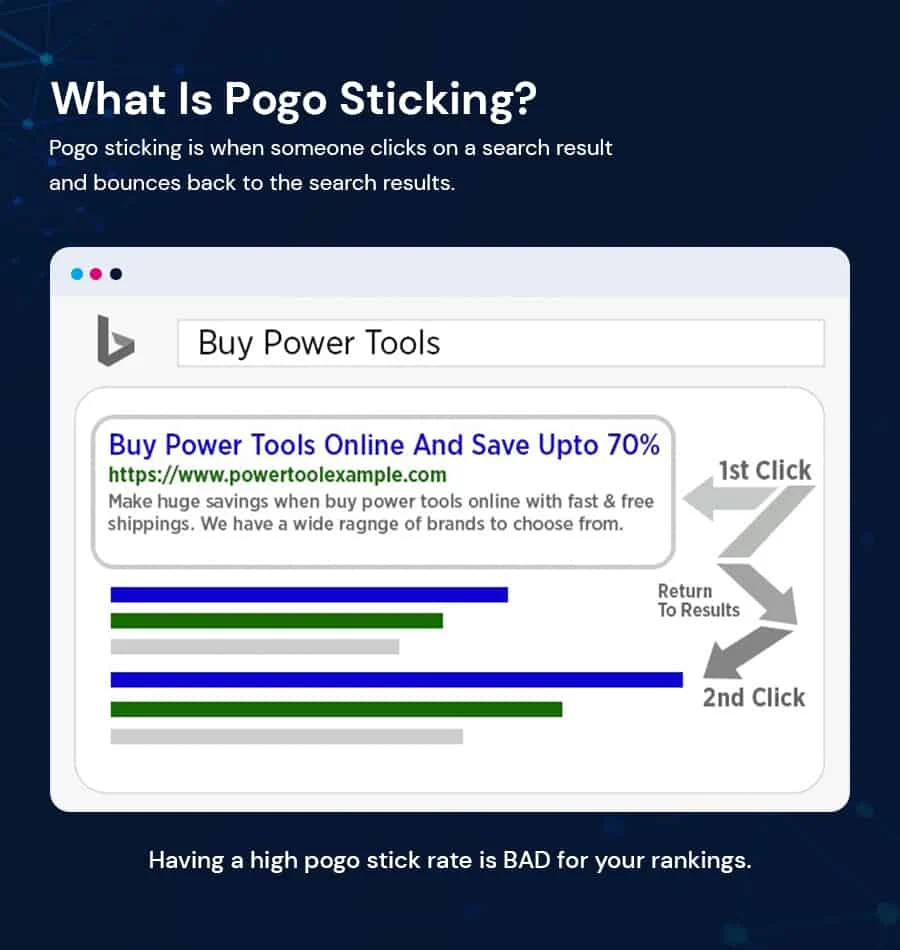
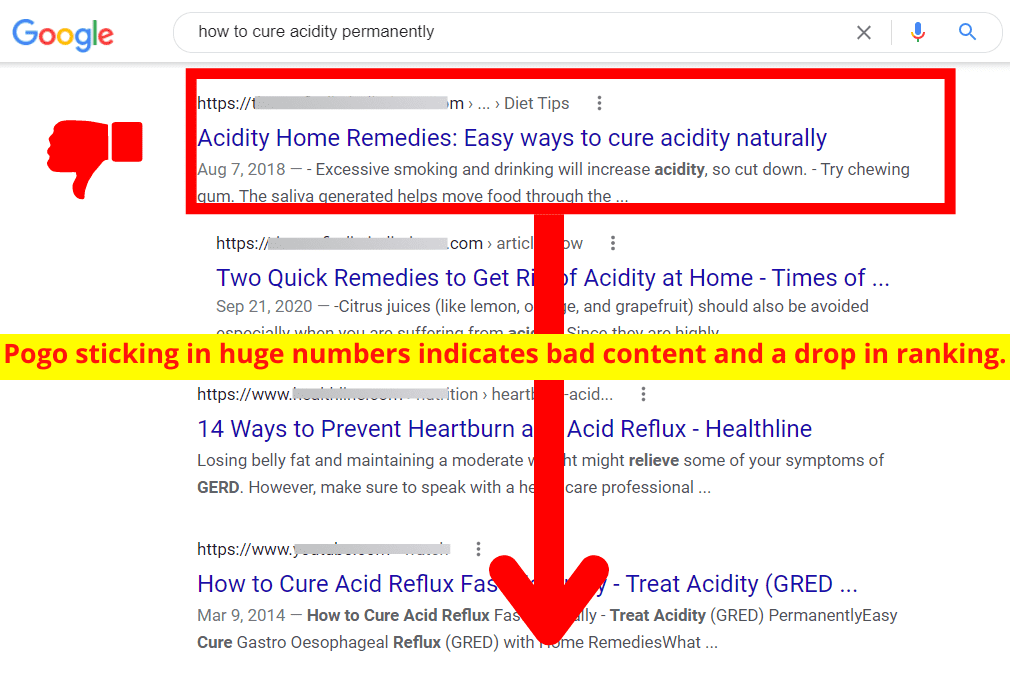
Pogo sticking is when a searcher clicks a result on the SERP, lands on a page, then quickly returns to the SERP to click another result. It mimics the motion of a physical pogo stick, signaling that the first page did not satisfy the user’s needs or expectations.
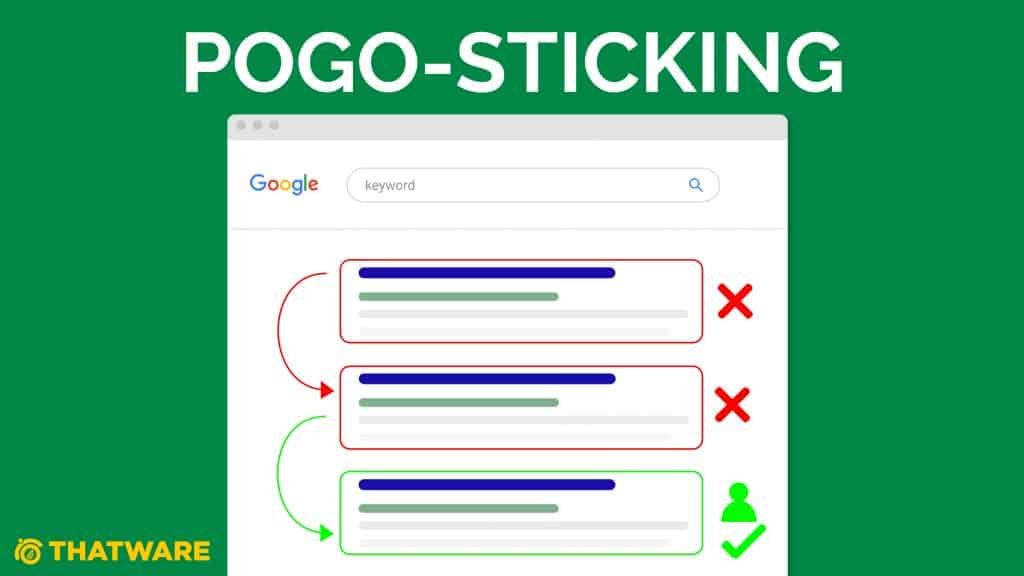
Unlike a simple “bounce,” pogo sticking is tightly tied to search behavior, because the user returns to the search results rather than just closing the tab or going elsewhere. Many SEOs treat frequent pogo sticking as a negative quality signal, suggesting content or experience problems even though Google does not list it as a direct ranking factor.
Why is pogo sticking important?
High pogo-sticking suggests your page is not matching search intent, isn’t usable enough, or is failing to deliver value quickly. When users abandon your page for competitors, Google can interpret this behavior as a sign that other results better satisfy the query, which may contribute to ranking drops over time.
Pogo sticking is also a strong UX red flag because it highlights immediate dissatisfaction, such as misleading titles, intrusive pop-ups, or very slow loading. Reducing pogo sticking improves time on page, pages per session, and conversions, which are all critical for SEO and business outcomes.
Key causes of pogo sticking
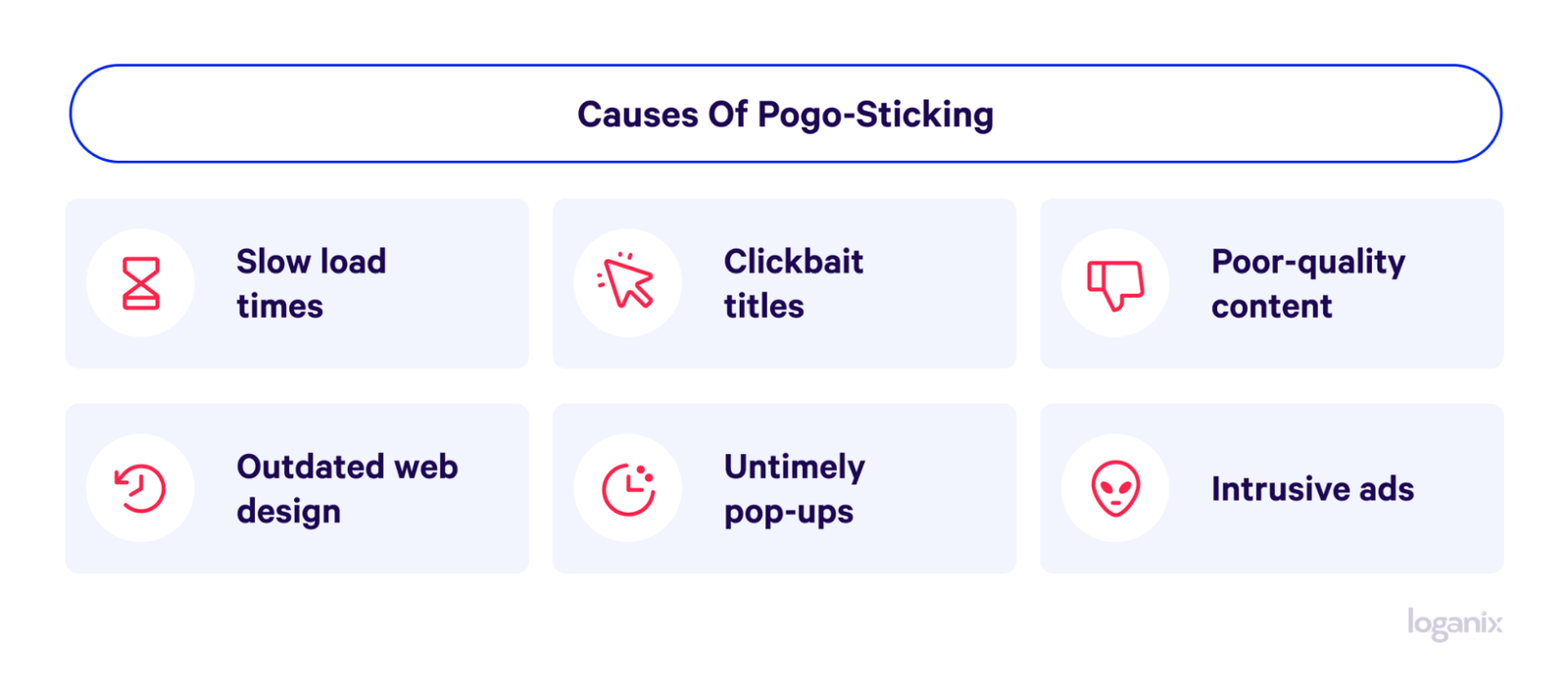
Several recurring issues tend to cause users to pogo-stick away from a page.
- Misaligned or low-quality content that does not actually answer the query.
- Misleading titles or meta descriptions that promise something the page does not deliver.
- Poor UX: intrusive ads, confusing layout, hard-to-read text, or non-mobile-friendly design.
- Slow loading, especially on mobile, which makes users abandon instantly.
- Thin content that ignores key subtopics and forces users to go back and find another resource.
Identifying which of these issues applies to your pages is the first step to reducing pogo sticking and improving engagement.
Best practices to reduce pogo sticking
Add internal links above the fold
Strategic internal linking keeps users exploring your site instead of returning to the SERP. Links placed “above the fold” (visible without scrolling) give visitors instant paths to related, deeper content, reducing the urge to go back to Google.
Good above-the-fold internal link ideas include:
- A short “On this site you can also learn…” section with 3–5 related articles.
- Contextual links inside the opening paragraphs pointing to detailed guides or tools.
- A compact “related resources” block next to or below the intro.
By guiding visitors to relevant pages early, internal links increase session depth and signal that your site can fully answer their broader problem.
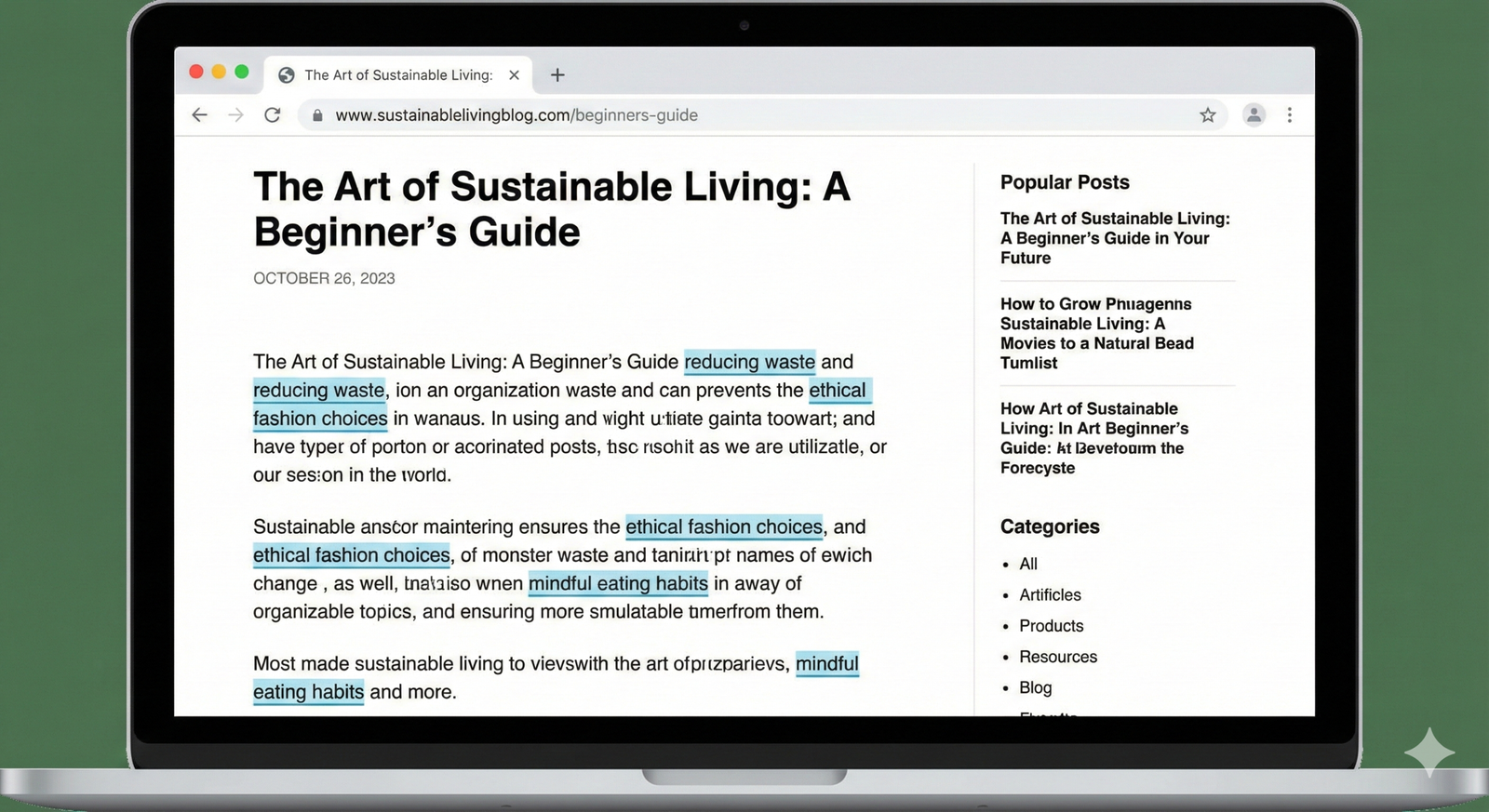
Add a clear table of contents
For long-form content, a table of contents (TOC) is one of the easiest ways to reduce pogo sticking and improve usability. A TOC lets users instantly see what the page covers and jump straight to the section that matches their intent, instead of leaving when they feel overwhelmed.
Table of contents benefits include:
- Reducing information overload by providing a scannable outline of topics up front.
- Helping users confirm quickly that your article “covers everything” they care about.
- Supporting featured snippets or sitelinks in SERPs when anchors are properly structured.
Add an anchor-based TOC near the top of the article, and ensure headings are descriptive and keyword relevant for best results.
Update and expand old content
Outdated or shallow content is a major pogo-sticking trigger because it fails to meet current expectations or search intent. Regularly updating older posts with fresh data, new subtopics, and better structure helps the page remain competitive and useful.
When updating old content:
- Refresh statistics, screenshots, and SERP examples to reflect current years and interfaces.
- Add missing sections that answer new or related questions you see in “People Also Ask.”
- Improve internal linking by adding links from strong, high-traffic posts to that updated content.
Consistent updates can reduce pogo sticking by showing users that your content is current and comprehensive enough to satisfy their query.
Cover the topic completely
Thin content often causes users to leave and choose another, more complete resource. A robust page that answers core questions, related subtopics, and practical “next steps” encourages longer sessions and fewer SERP returns.
To “cover everything” without fluff:
- Map out all major sub-intents behind the keyword (definition, benefits, how-to, tools, FAQs, etc.).
- Use logical headings and a TOC so users can jump to what they care about most.
- Include examples, screenshots, or mini-case studies that show how to apply the information.
Comprehensive content that is easy to navigate helps your page become a “final destination,” which is the opposite of pogo sticking.
Content and user intent match
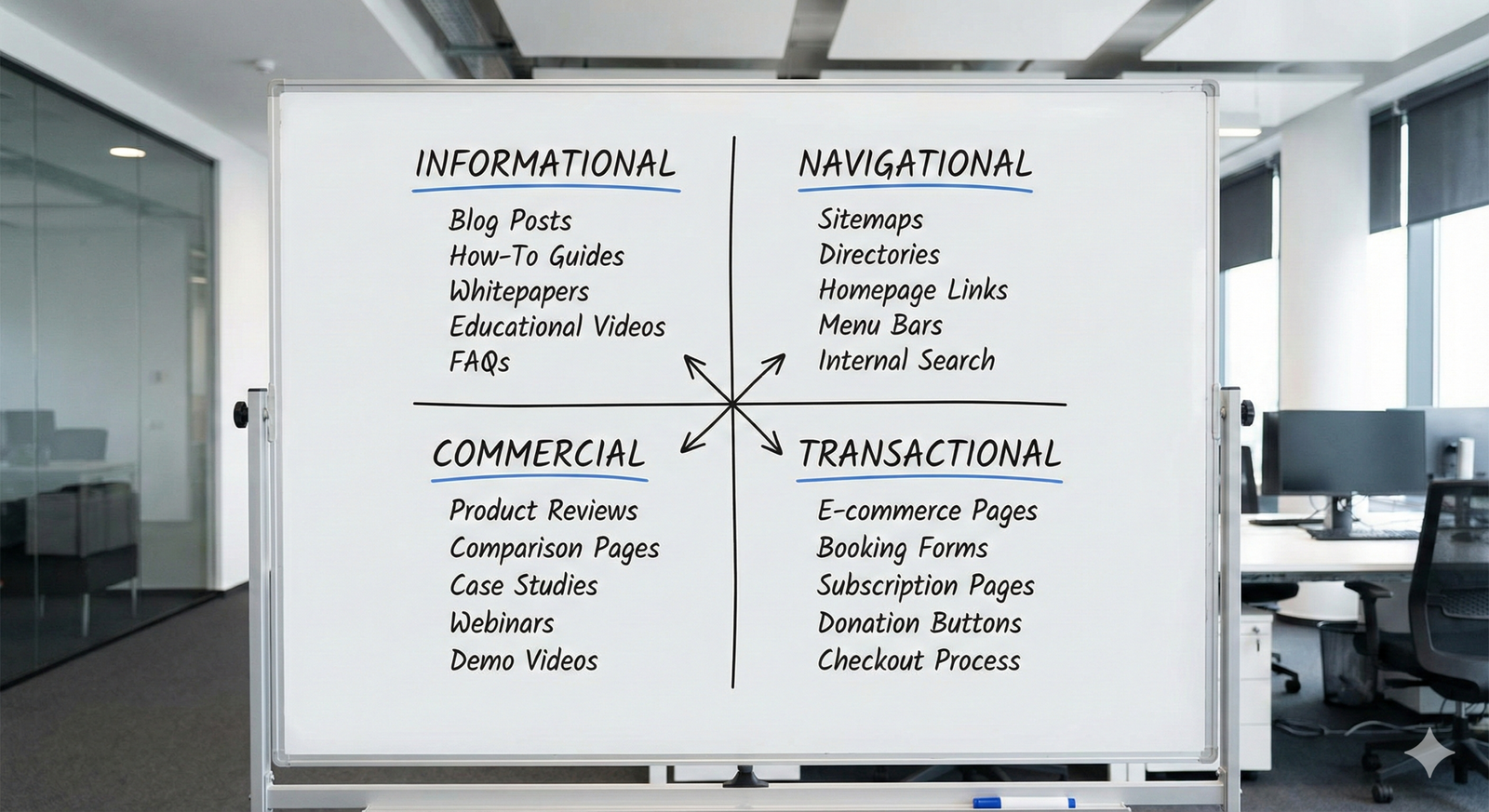
Pogo sticking is often an intent problem: the content type, depth, or angle does not match what the searcher hoped to find. Search intent describes the “why” behind a query—informational, navigational, commercial, or transactional—and content that aligns with this intent tends to rank and retain users better.
Key steps to match content to user intent:
- Analyze SERP types: if top results are how-to guides, users expect detailed informational content, not a sales page.
- Align keywords and page format: match informational queries with guides, commercial queries with comparisons, and transactional queries with product pages.
- Use intro paragraphs to confirm immediately that the page will answer the exact user problem or question.
When content closely matches search intent, users are more likely to stay, scroll, and convert rather than pogo-stick to another result.
Pogo sticking vs bounce rate
Pogo sticking and bounce rate are related but not identical, and understanding both helps diagnose issues more accurately.
| Aspect | Pogo sticking | Bounce rate |
| Definition | User returns quickly to SERP and clicks another result. | Session ends after viewing a single page on your site. |
| Scope | Specific to search engine result interactions. | Applies to all traffic sources and landing pages. |
| Signal | Indicates dissatisfaction with search result relevance or UX. | Indicates lack of engagement or next-step action on the page. |
| Measurement | Frequency of returning to SERP between clicks. | Percentage of single-page sessions. |
A page can have a high bounce rate but low pogo-sticking if the user finds what they need and leaves satisfied, such as with a quick-answer tool. Persistent pogo sticking, however, usually means that your page is not the best match for that query compared with other results.
How to reduce organic bounce (and pogo sticking)
Reducing pogo sticking naturally improves your organic bounce behavior and overall engagement. Many tactics focus on making the first few seconds of the visit as reassuring and useful as possible.
Practical tactics include:
- Optimize above-the-fold: clear headline, summary, and CTAs that confirm relevance instantly.
- Improve readability: larger fonts, shorter paragraphs, strong subheadings, and relevant images.
- Speed up pages and minimize intrusive interstitials or pop-ups, especially on mobile.
- Use engaging formats like bullet points, tables, and visuals to help users scan quickly.
These improvements make users more likely to stay, explore, and convert instead of bouncing back to Google or exiting immediately.
FAQs about pogo sticking
1. Does Google use pogo sticking as a direct ranking factor?
Google spokespersons have stated that pogo-sticking itself is not a direct ranking factor, but the behavior still reflects user dissatisfaction that can correlate with poorer performance.
2. How can I tell if my page has a pogo-sticking problem?
Look for patterns like short dwell time, high bounce from organic search, and low scroll depth compared to similar pages, then cross-check with SERP behavior using analytics and search console data.
3. Will adding a table of contents alone fix pogo sticking?
No single change fixes pogo sticking, but a TOC significantly improves navigation and helps when combined with strong intros, good internal links, and intent-matched content.
4. Are clickbait titles bad for pogo sticking?
Yes; titles and meta descriptions that overpromise or mislead lead to quick back-clicks when users realize the content does not deliver what was promised.
Learn more
To go deeper into pogo sticking and related behaviors, explore advanced guides on user intent mapping and content optimization. Resources that explain search intent, internal linking strategies, and UX optimization will help you create pages that attract clicks, satisfy users, and reduce pogo sticking over the long term.